
Humidity
Soil Moisture& Evaporation
Soil Moisture, (SM)%, Daily
It represents the proportion of moisture contained in the soil. The darker the color, the more moisture there is in the soil, and the lighter the color, the less moisture there is.
Potential Evapotranspiration, (PET) mm/day, Daily
It refers to the sum of the moisture evaporating from the plant and the moisture evaporating from the soil. That is, it refers to how much water can evaporate when atmospheric conditions are ideal.
-
Blue (~60%): Very high moisture. Close to saturation.
-
Green (40-50%): Sufficient moisture. Ideal for plants to grow.
-
Yellow Orange (20~30%): Slightly dry. It can be stressful for some plants.
-
Red (no more than 10%): Very dry. It can be drought, and it is a difficult environment for plants to grow.
-
Red (above 8 to 9 mm/day): Very high evaporation potential. Strong sunlight, high temperature areas.
-
Yellow green (46 mm/day): evapotranspiration in normal summer weather.
-
Blue (1-3 mm/day): areas with low evaporation potential. Mainly northern high elevation areas or cloudy and cool areas.
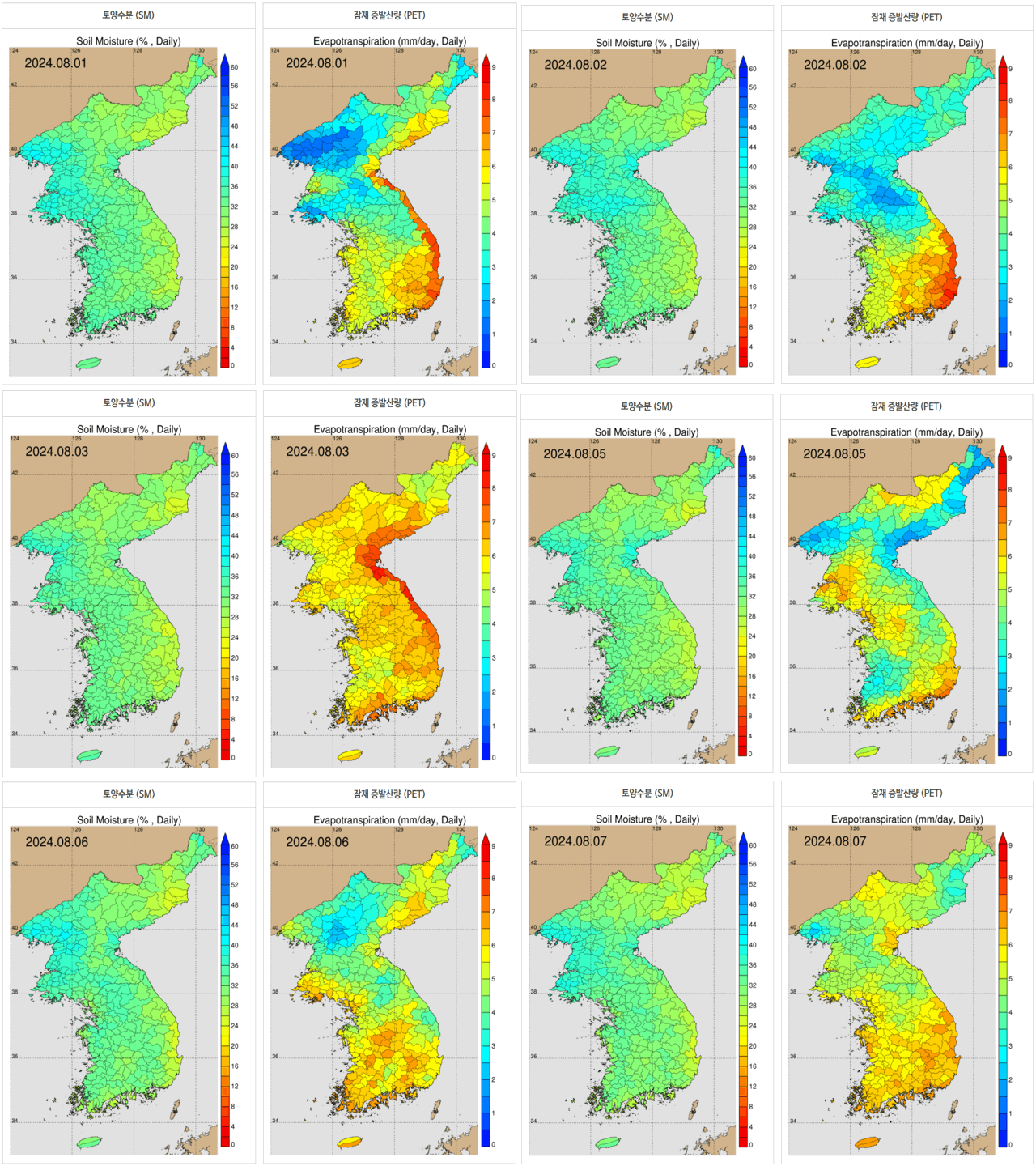
In general, the entire Korean Peninsula is showing moderate moisture (20 to 40%), but it can be vulnerable to drought due to strong sunlight and higher evapotranspiration at high temperatures.
Heatwave and Drought Concerns
In the summer of 2024, the entire Korean peninsula faced a record-breaking heat wave and the resulting increase in moisture evaporation.
In particular, the potential evapotranspiration observed as of early August was significantly higher than that of the average year, and accordingly, soil moisture disappeared rapidly. This phenomenon goes beyond simply increasing temperature and acts as a direct indicator of drought risk.
In the past, "drought" was understood only as a situation without rain, but today it is recognized as a complex phenomenon of increased water demand + insufficient water supply. In particular, regions with higher dependence on agriculture and water resources, these changes pose a direct threat to livelihood and food security.